I ran Verifiable Cities as an applied research track inside the Ethereum Foundation, together with Rithikha Rajamohan, who specializes in digital public infrastructure. The premise is that public blockchains can put verification, accountability and coordination directly into how public rules and money operate, increasing state capacity without expanding state power or vendor control. Cities are the right level, since they feel operational pressure in real time and share the same problems in their thousands, so what works in one can transfer.
We opened the track with a call for implementations: a map of where cryptographic infrastructure could carry municipal operations, the research and precedents behind it, and an invitation to governments and the organizations around them to build on it.
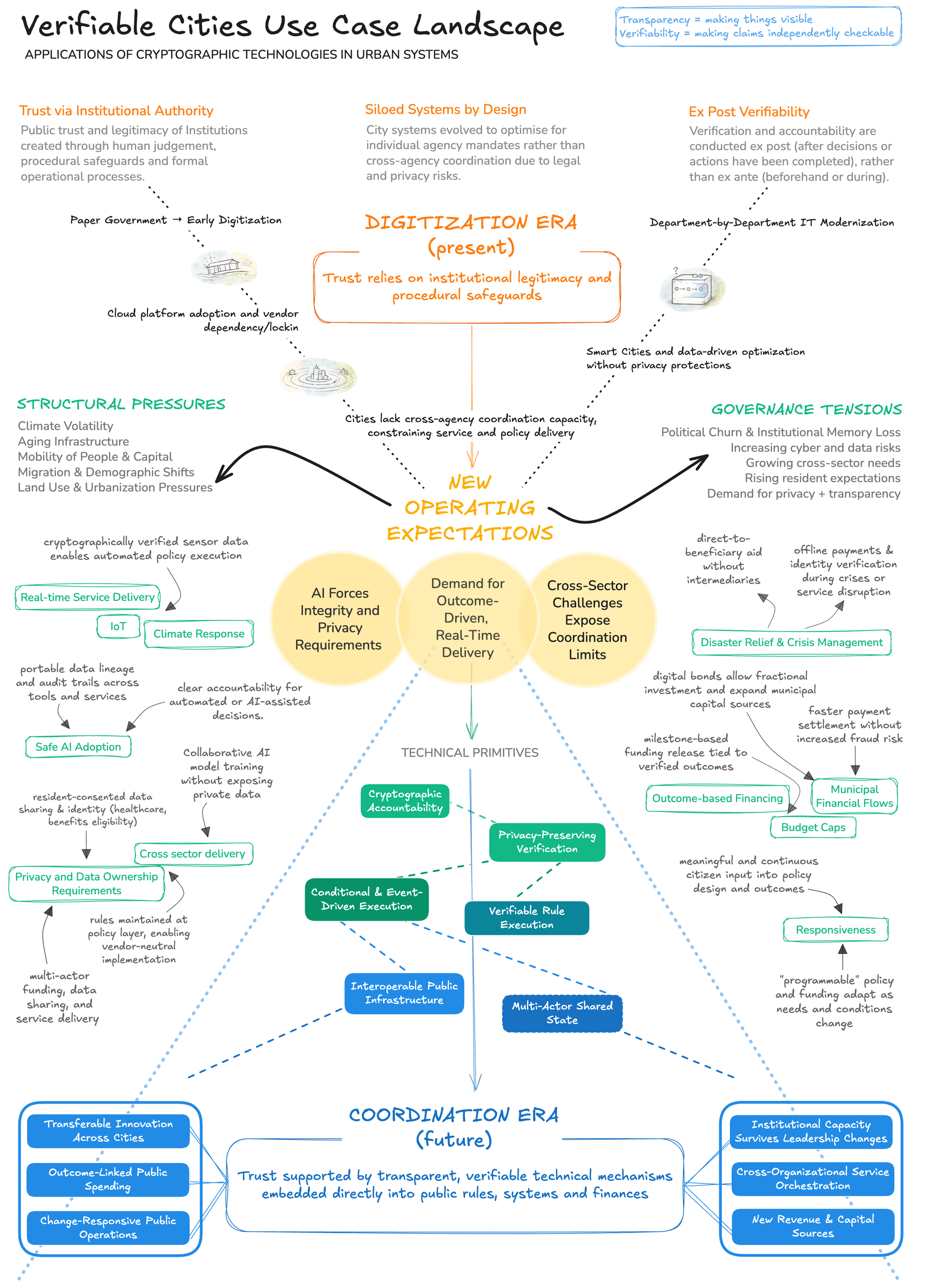
We then ran a discovery process with municipal governments, startups, funders and civic technology organizations across North America, Europe and Asia-Pacific. The same pain points kept coming back, and we distilled them into six pilot concepts, from programmable policy to privacy-preserving digital IDs, each one a shape a city can take up on its own or in combination with the others.
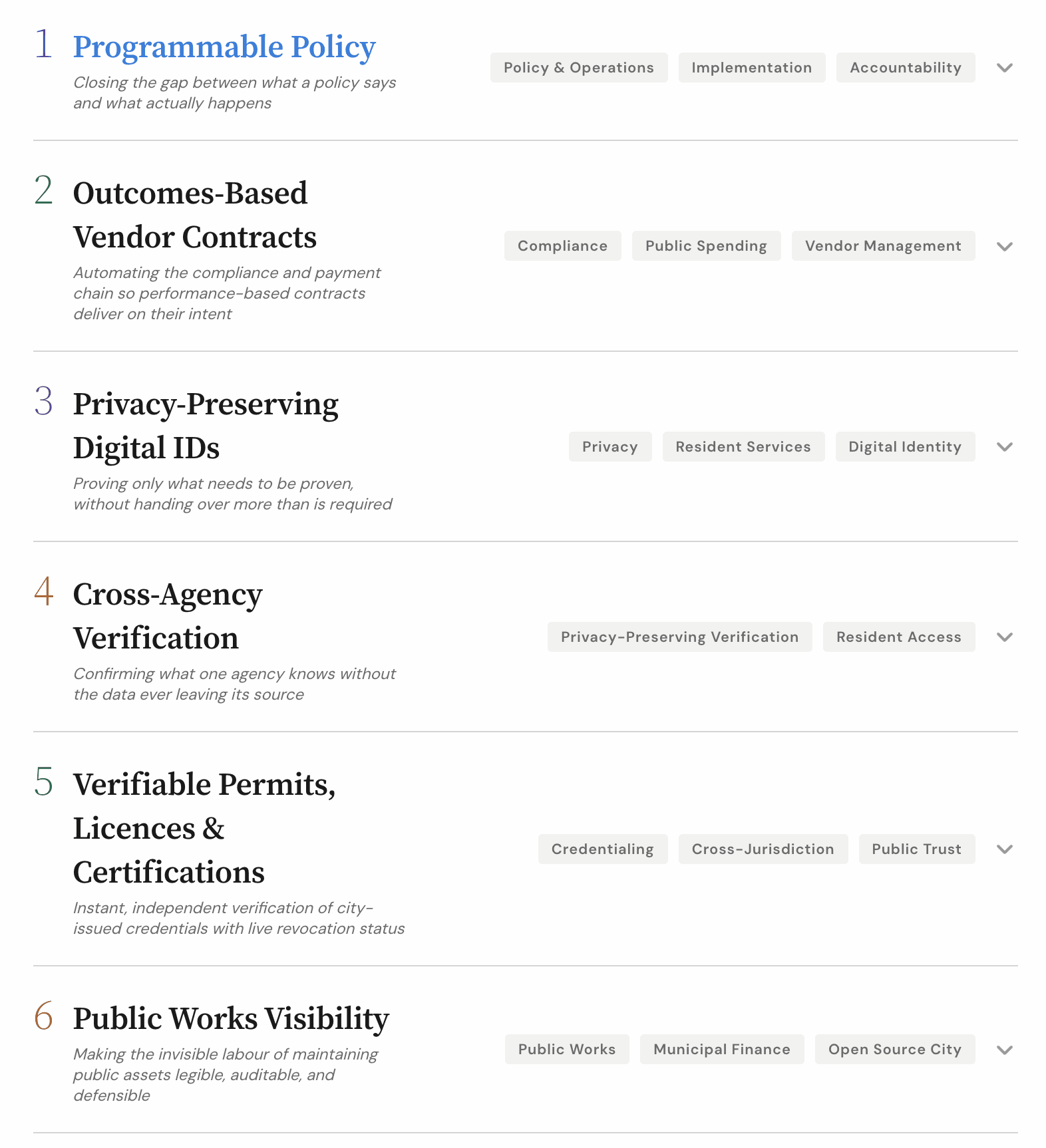
We have continued working with the cities and organizations that came through the discovery process to scope concrete pilots, and with funders and civic networks in a position to run these concepts elsewhere.