Each pattern describes a problem which occurs over and over again in our environment, and then describes the core of the solution to that problem, in such a way that you can use this solution a million times over, without ever doing it the same way twice.
— Christopher Alexander, A Pattern Language
In 1977 the architect Christopher Alexander published A Pattern Language: 253 patterns for building, from the shape of a region down to the placement of a window seat. Each pattern names a recurring problem and the core of its solution, and links to the larger patterns it serves and the smaller ones that complete it. That web of links is what makes it a language rather than a list, and it was written for anyone who builds, not only architects. The idea has since given software, games and web design their own pattern languages.
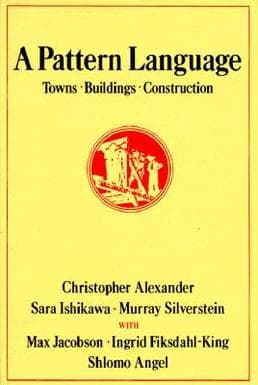
I set out to borrow Alexander's framework for mechanisms: to treat a quadratic funding round, a conviction vote or a rage quit as a pattern with a problem, a solution and known trade-offs, and to connect those patterns into a language that anyone designing an onchain community could use.
For most of history our social structures, our laws, currencies, companies and republics, have been built from the equivalent of mud and bamboo: agreements that can always be broken, so they eventually are. Smart contracts are the first durable material for social structures, and they come with a physics we don't yet fully understand. People have started building in the new medium, but mostly basic structures, assembled from primitives that get rediscovered each time. A pattern language is a way to map the territory: what the material can hold, which forms keep recurring, and how they combine.
The Mechanism Library
The Library is the vocabulary: about 135 mechanisms, gathered by a brute-force survey of existing onchain systems and of the fields they borrow from, game theory, public choice, behavioral economics, cryptography and distributed systems. Each follows one template:
- How it works
- Where it came from, and how it has developed
- Strengths & weaknesses
- Design considerations
- Examples in use
And each belongs to one of seven types, every type covering a different job a system has to do. Not every system needs one of each:
- Fundraising: Coordinating the flow of capital into a system.
- Allocation: Distributing scarce resources among participants.
- Value Capture: Retaining and monetizing generated value.
- Rewards & Penalties: Shaping incentives to influence behavior.
- Exchange: Facilitating the transfer, trade, and pricing of assets.
- Governance: Structuring permissions and decision-making rules.
- Data: Managing information flow, integrity, and access.
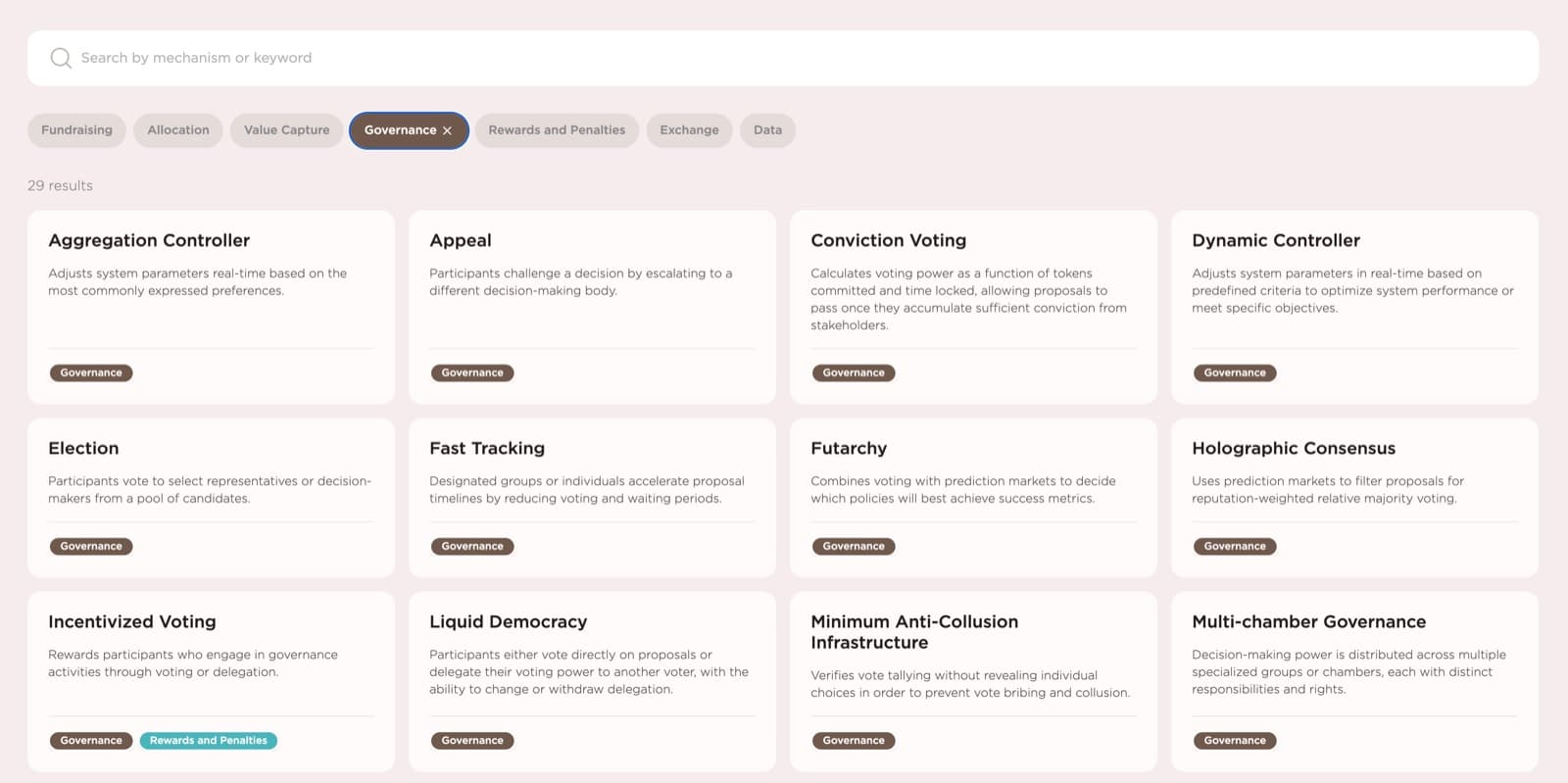
Tools
The library says what the parts are; the tools help people put them together. Three came out of the work, each built to be forked.
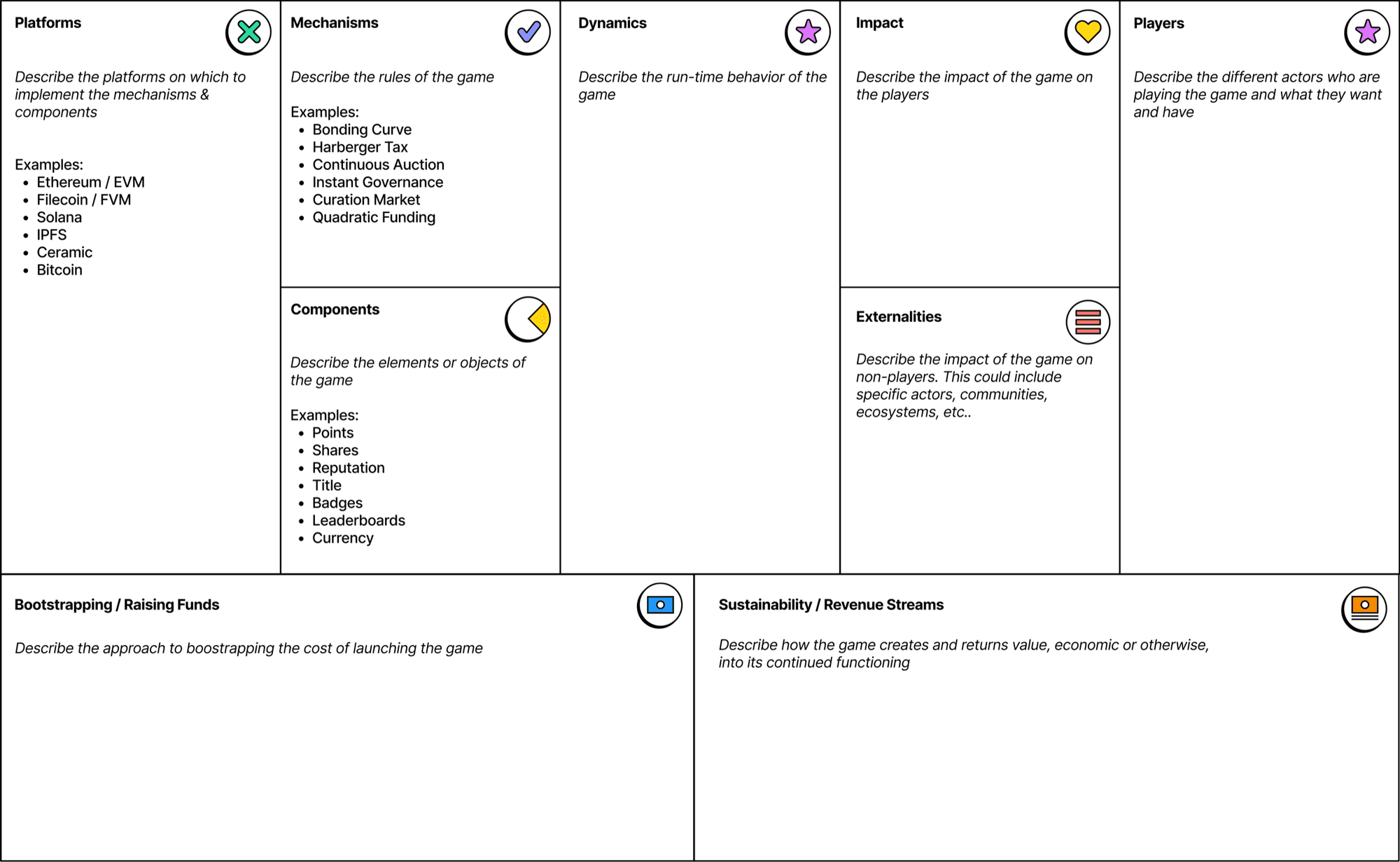
The Mechanism Canvas is a Figma board that does for a mechanism what the business model canvas does for a company: nine boxes for the platforms it runs on, the mechanisms and components it is made of, its run-time dynamics, its players, its impact on them and its externalities on everyone else, and how it is bootstrapped and sustained.
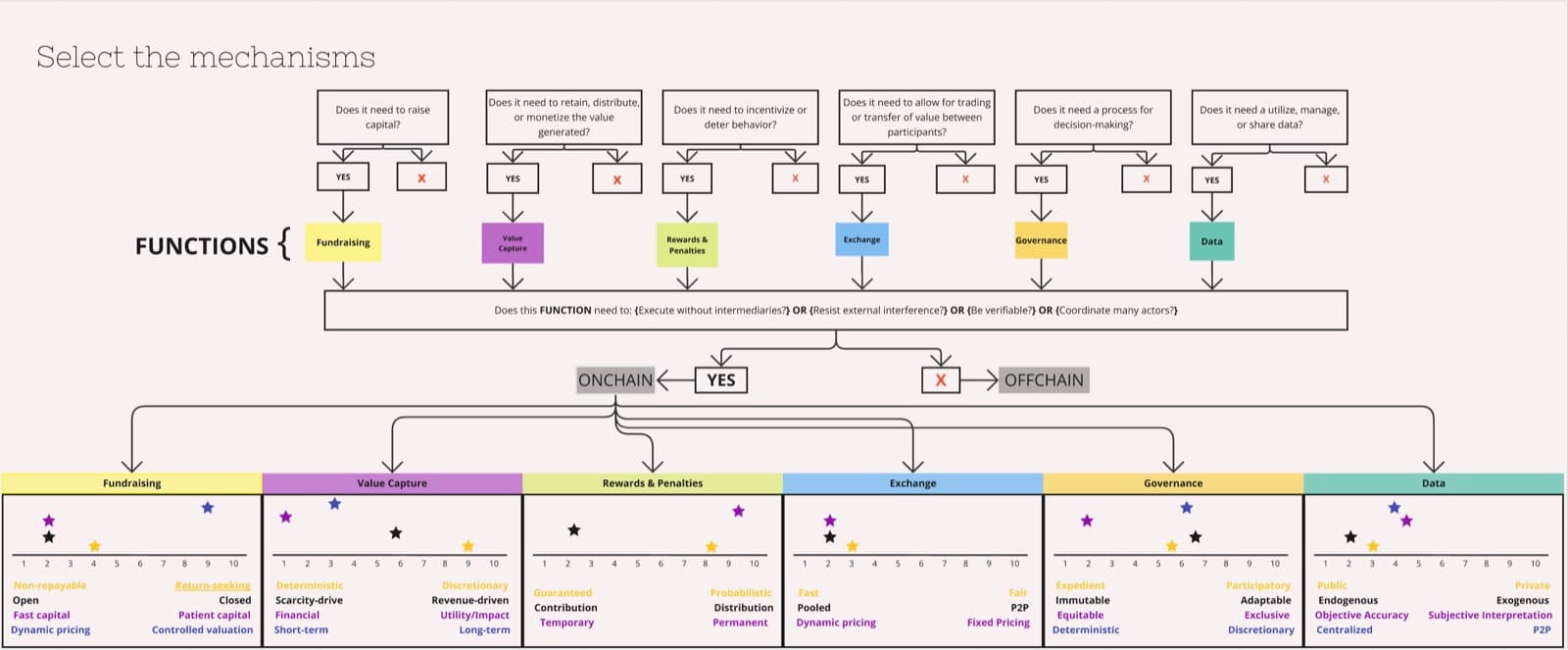
The Mechanism Methodology is the decision tree in front of it: which functions a project needs, whether each one really has to be onchain, meaning it must execute without intermediaries, resist interference, be verifiable or coordinate many actors, and then, for each function, where to sit on the design dimensions that matter, from non-repayable to return-seeking, guaranteed to probabilistic, immutable to adaptable.
A mechanism is also an investment, and most communities have no way to say whether it is worth it. With Gitcoin, we built a public impact measurement workbook: set the threshold a mechanism has to clear as a cost of equity, forecast the value it creates from users, growth and churn, discount for the honest probability of failure, and arrive at a net present utility value to weigh against the investment required. The worked example is Gitcoin Passport's GTC staking and slashing, the same mechanism behind the slashing engine in the identity exploration.

 Observable
Talks and workshops
During EthCC 2023, we gathered leading thinkers and operators in mechanism design from BlockchainGov, Gitcoin, Metagov, Protocol Guild, Protocol Labs, Urbit, Maker and Uniswap for a workshop on what the experiments of the last few years had taught, and where to go next.
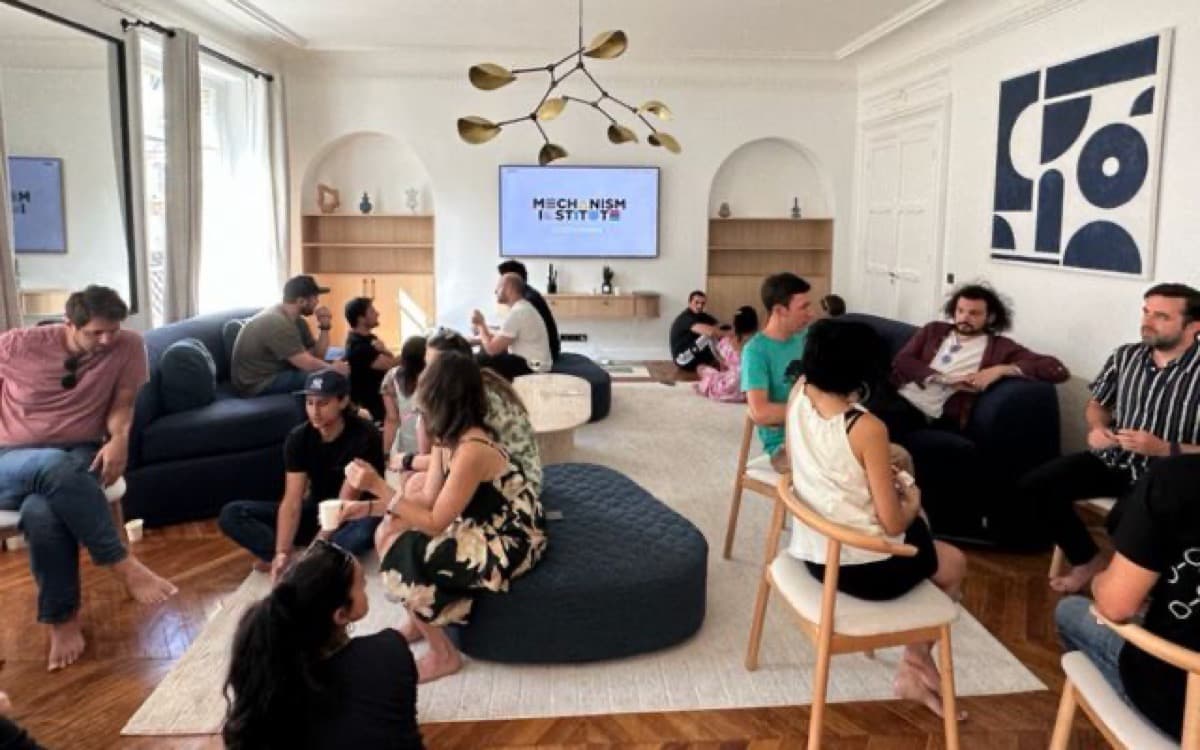
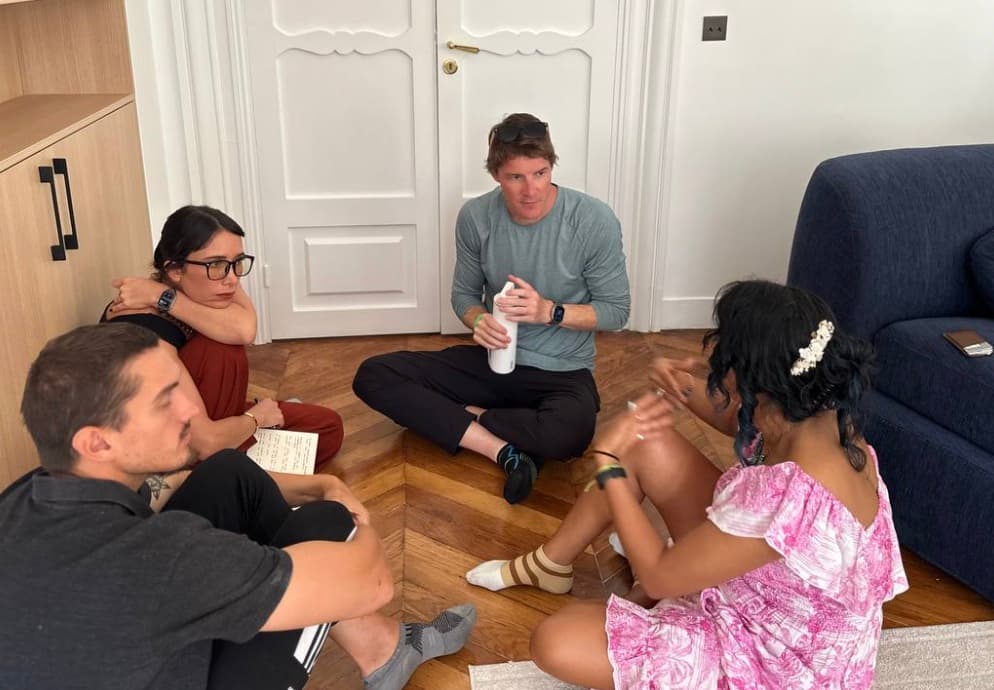
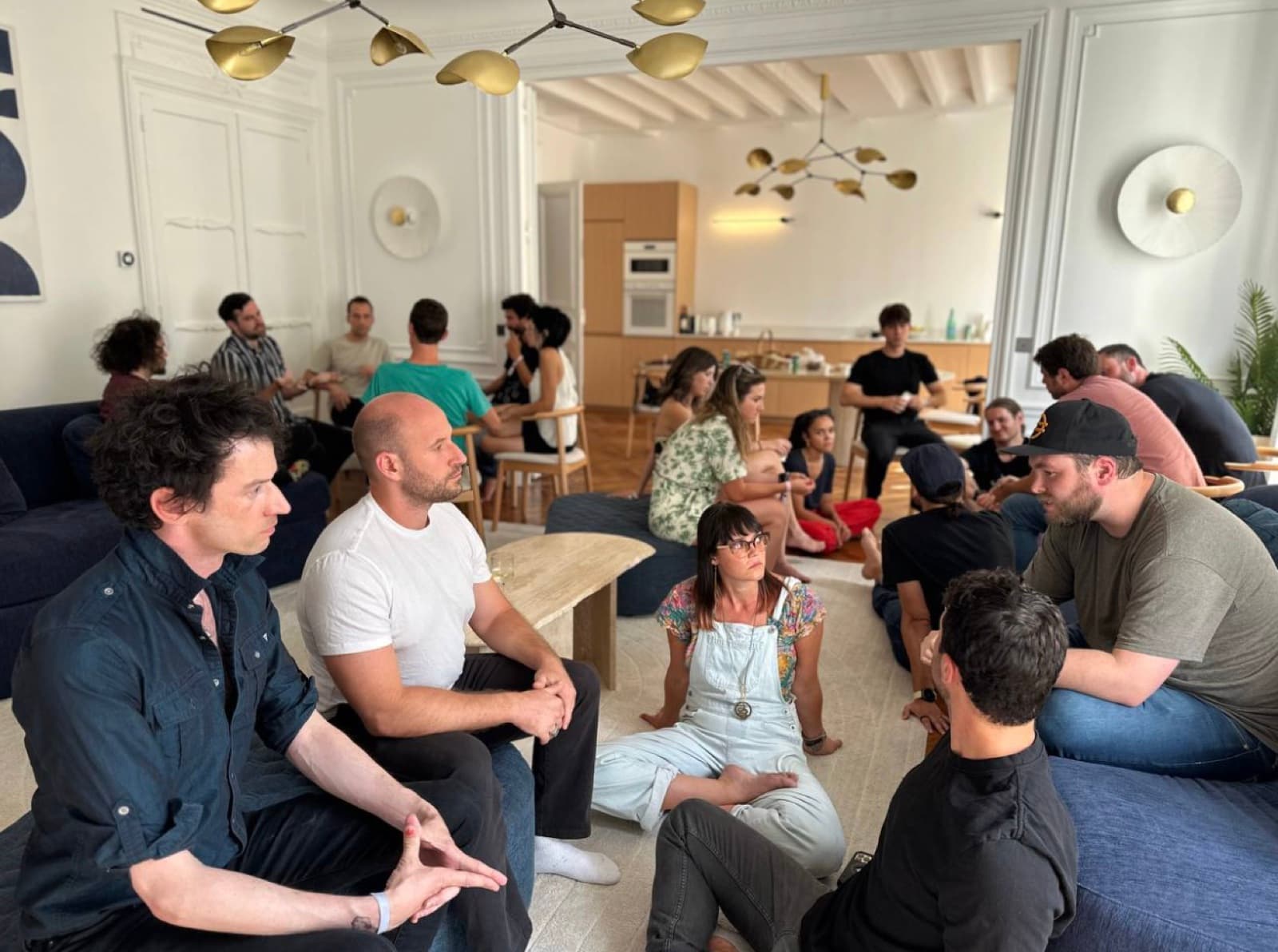
Along the way I also gave talks and workshops at Metagov, Ethereum Berlin and GreenPill's Allo Capital series.