dOrg started as a collective of engineers interested in organizing as a DAO to build DAO tooling. I led the operational and business side: setting up the legal and financial structure, finding our clients, and refining how we ran ourselves. I also helped design the DAO tools we built for clients over the years.
dOrg, a company with no bosses
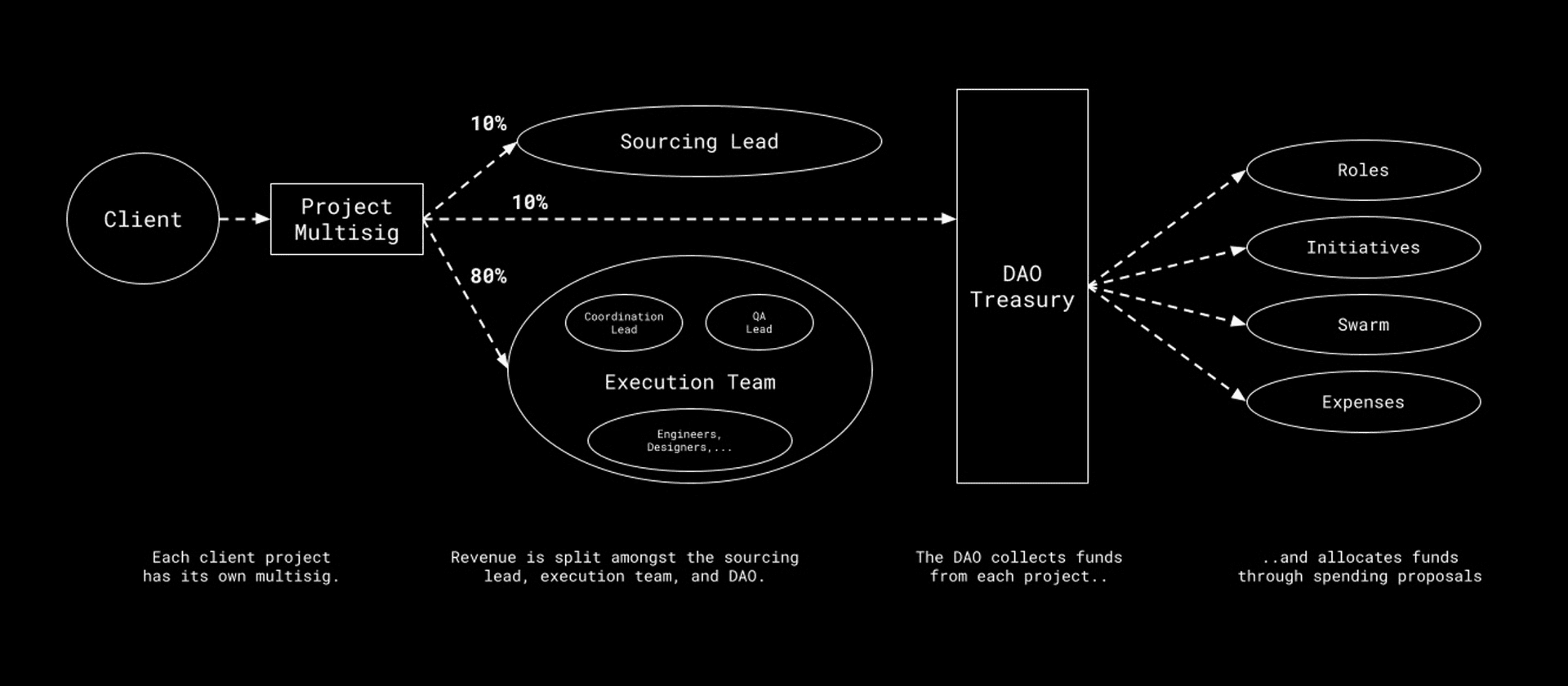
Membership is a non-transferable token called Rep, earned by doing work: one Rep for every dollar earned, so it inflates with the work that gets done. A member's Rep is their share of voting weight, of bonuses, and of legal ownership of the LLC. Each client project runs through its own multisig and shares a percentage of its revenue with the DAO, whose treasury the Rep holders govern collectively.
The hard part was rebuilding every function an agency needs without hierarchical authority. Marketing, sales, recruitment, quality assurance, accounting and reporting all had to run on incentives and bottom-up processes rather than on managers. What came out of it is a global collective of elite developers that helped build some of the earliest DeFi and DAO infrastructure.
DAO tooling
Our first client was DAOstack, a modular DAO framework that we supported by developing the DAO creation app, JS SDK, and custom governance modules for pioneering DAOs like DXdao, DeversiFi/Ethfinex, Kyber Network and GoodDollar.
As the space evolved, we also worked with major DAO tooling companies, including:
- Aragon: the most widely used DAO framework, with users like Lido, Curve and Decentraland
- Zodiac: Gnosis Safe's DAO framework
- Homebase: the Tezos DAO framework
- Opolis: payroll and insurance for DAO contributors
- Coordinape: DAO compensation tooling
In parallel we expanded into DeFi and web3 infrastructure, such as The Graph, Uniswap, Balancer, Compound, Badger, StarkWare, Polkadot, NEAR and Messari.
Talks and coverage
During this time, I worked hard to grow interest in DAOs through talks, podcasts, and press coverage, including a dedicated profile by TIME magazine.
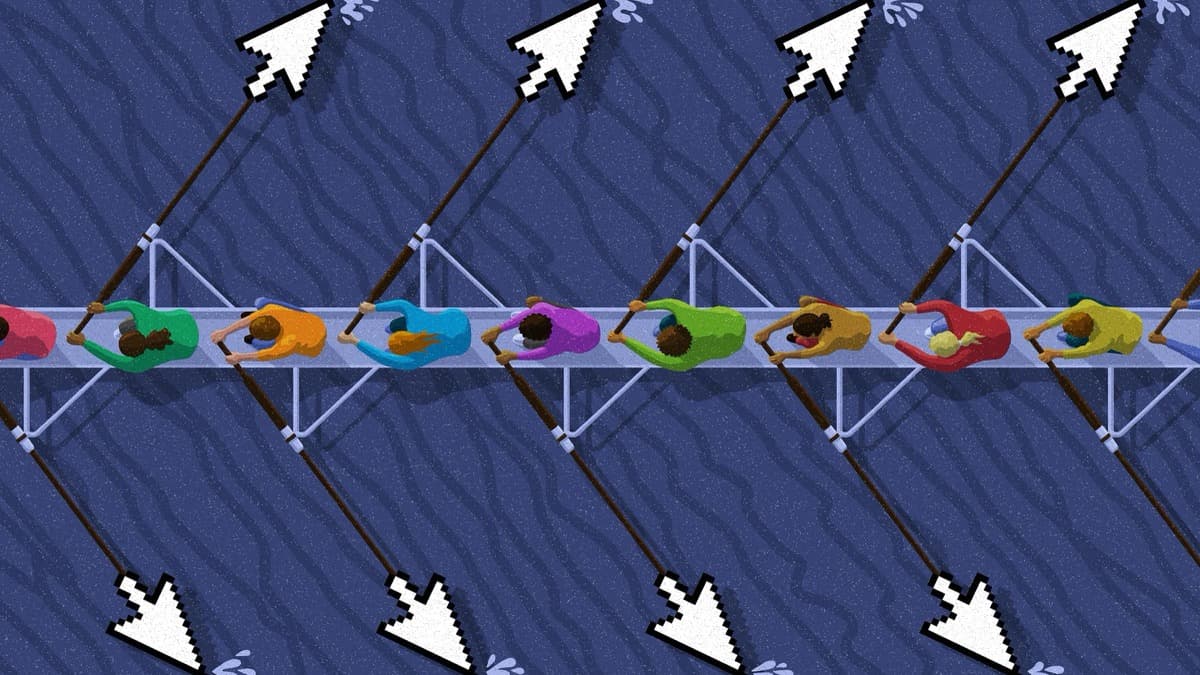
 TIME
TIME
 The Blockchain Socialist
 The Delphi Podcast
dOrg quickly became the go-to case study of how DAOs actually work in practice, appearing in a number of academic articles and industry reports such as this one by the World Economic Forum.
 Bristol University PressThe Promise and Perils of Corporate Governance-by-Design in Blockchain-Based Collectives: The Case of dOrg
 World Economic ForumDecentralized Autonomous Organizations: Beyond the Hype
Where it stands
In 2023 I handed the operational roles I held to other members and made sure the right people were in place to keep things running without me. My Rep has kept shrinking since, as the people doing the work overtook me, which is what it was designed to do. dOrg is still running, still owned by the hundred-odd engineers who have contributed to it over the years, and still shipping for web3 clients.