It's interesting to imagine a world where money just flows to the individuals and projects producing the most value for a given ecosystem. I've explored this pretty deeply in the context of crypto ecosystems, because I think the same mechanisms could power a fully networked economy that relies less on government and corporate spending, endogenously provisioning its own common pool resources instead.
DAO Drops
Over the course of 2022 I designed and led the team that built DAO Drops, a retroactive funding experiment that put the allocation of ecosystem funds directly in the hands of Ethereum users, with support from the Ethereum Foundation and Octant.
Anyone could nominate a project; voting power was calculated from a voter's past onchain activity rather than from tokens; and the first round dropped $250,000 to nominees in proportion to the votes they received. The round is now a forkable template, so any community can run its own.
fundpublicgoods.ai
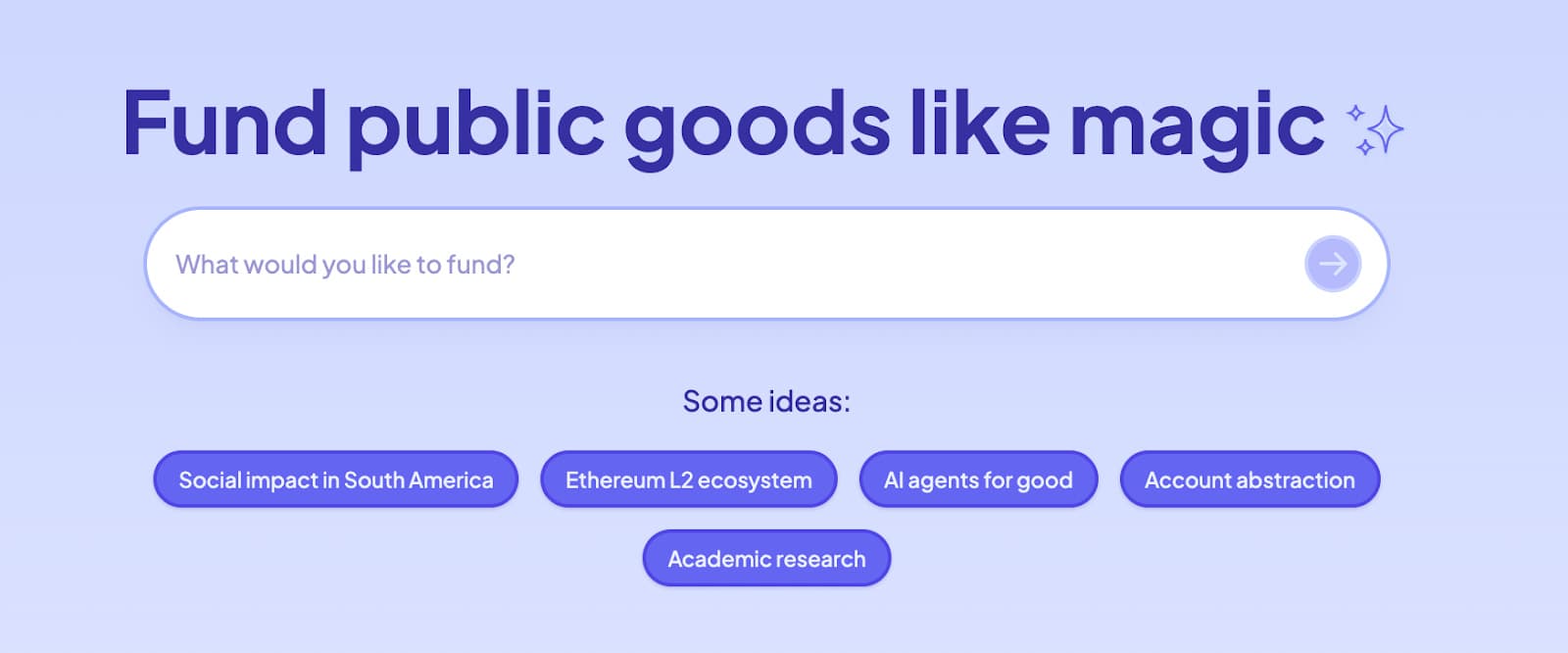
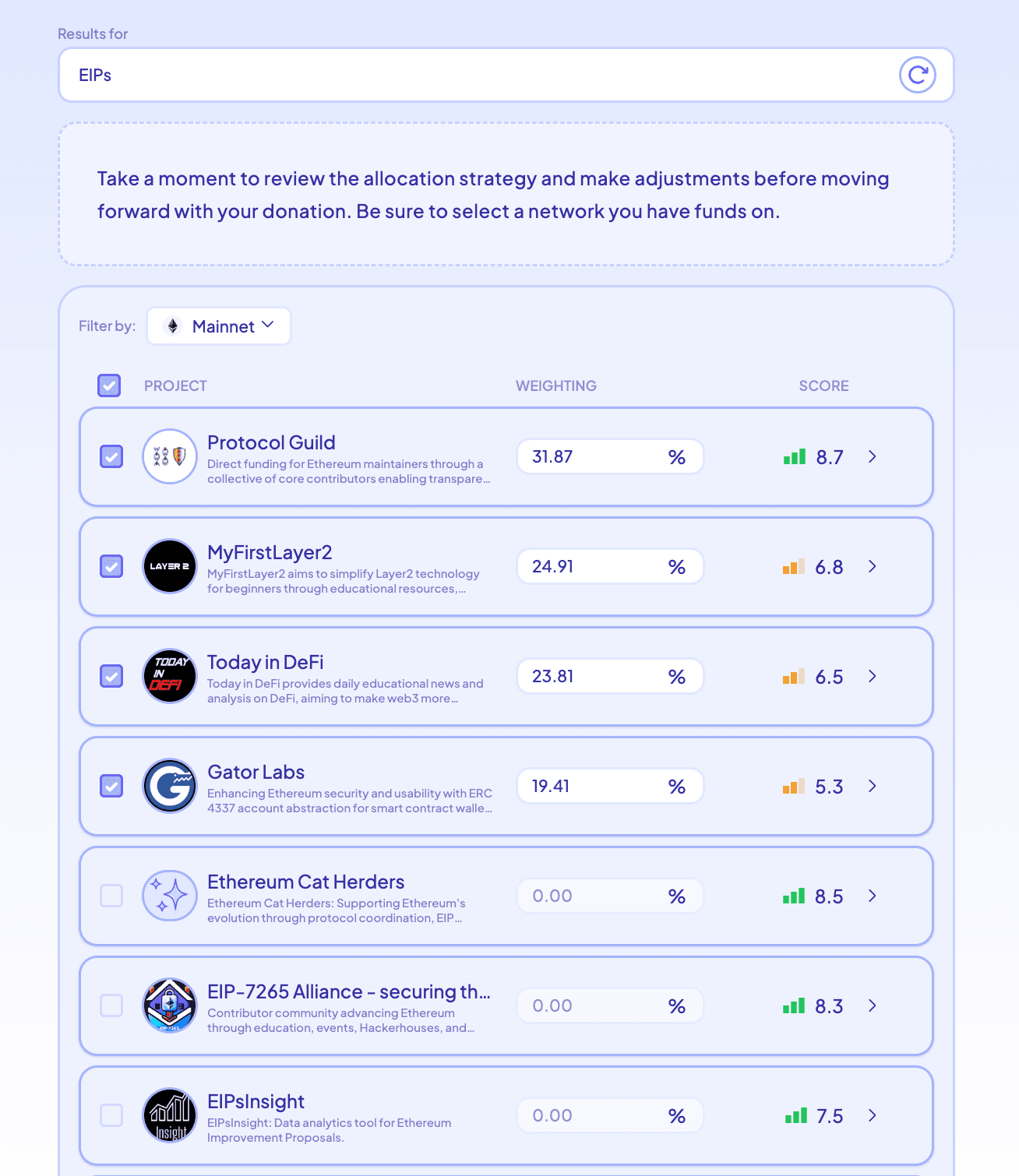
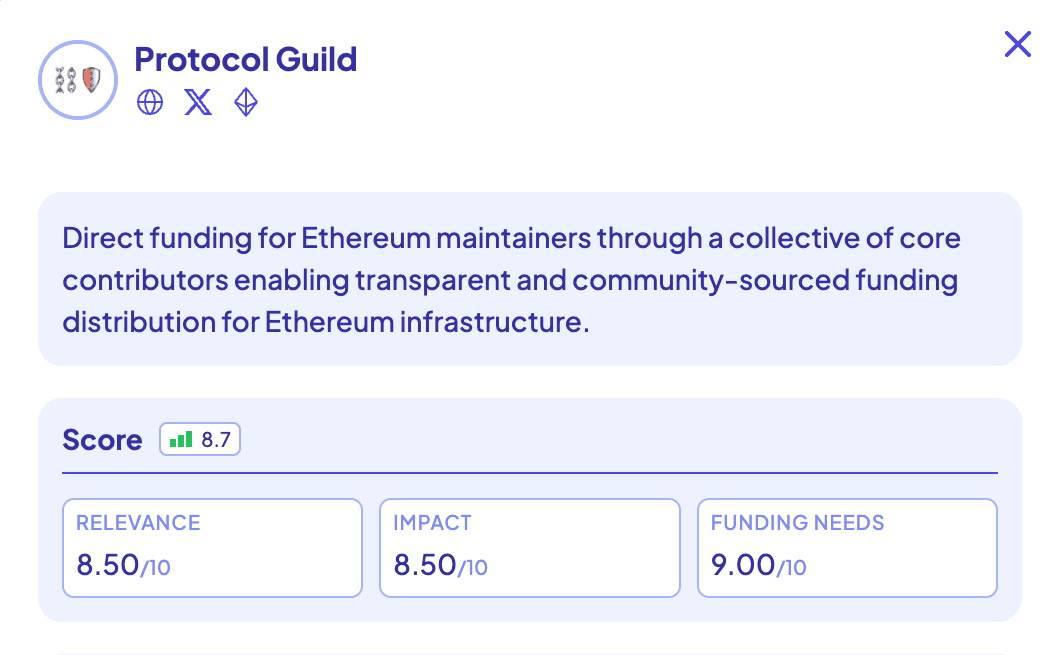
In 2024 I designed fundpublicgoods.ai with Gitcoin, an agent that takes on the allocation side: tell it what you care about and it searches past funding rounds for the projects that fit, scores each on relevance, impact and funding need, and proposes how to split a donation between them.
 GitHub
Every score comes with the evaluation behind it, so a donor can argue with the agent and adjust the weights before sending anything.
Mechanisms for provisioning public goods
At the Mechanism Institute we mapped the whole design space: how public goods funding actually works, how the onchain approaches compare with the state's, and which mechanisms are worth building next.
 Mechanism Institute